
In this topic the grammar that we will learn are :
- 的 de
- 吗 / 是不是 ma / shìbushì
- 没有 méiyǒu
- 很 hěn
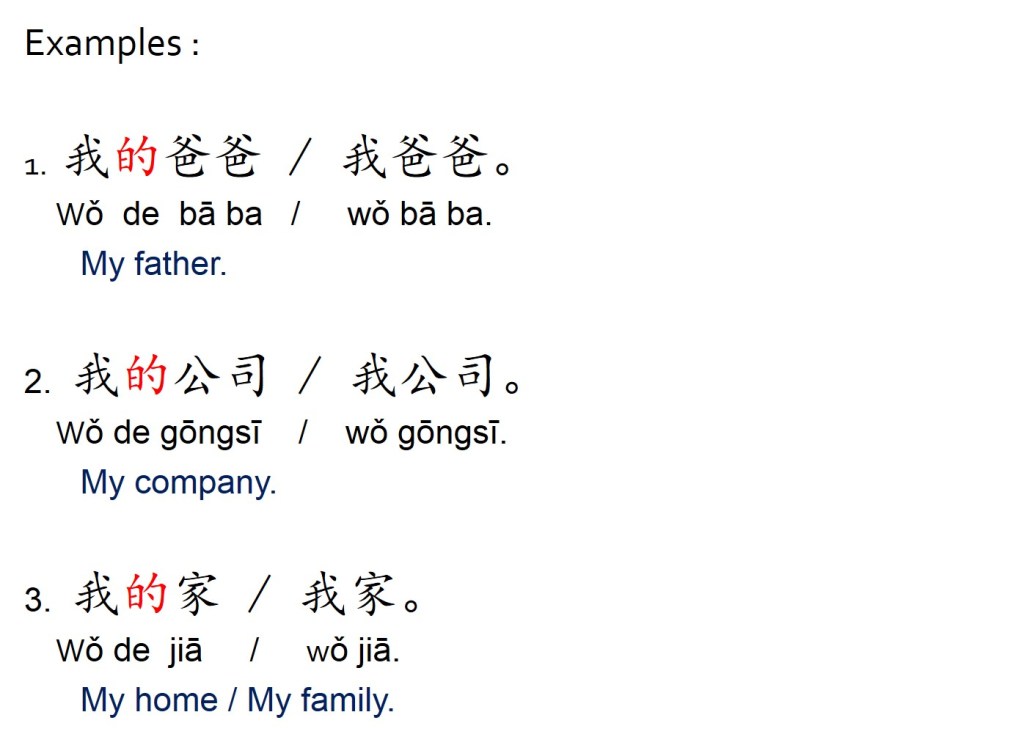
的 de
Meaning : [after an attribute] , in Malay : (punya)
• In lesson 1, the word 的 (de) is already discussed.
• But in this lesson, the word 的 (de) can omit in these cases:
- A close personal relationship is involved (family, close friends, boyfriends or girlfriends)
- An institutional or organizational relationship is involved (school, work)
吗 / 是不是 ma / shìbushì
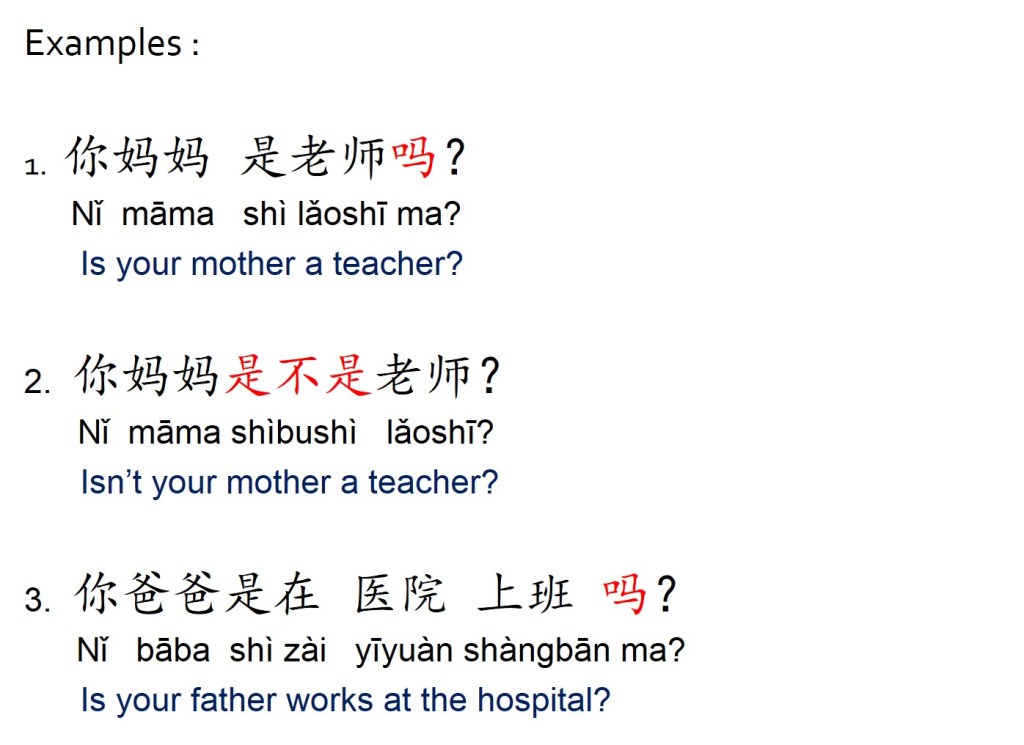
Meaning : isn’t in Malay : (kah , betul tak)
These 2 words basically are questioning word. The differences are :
• 吗 (ma) is a questioning word and always be put at the end of the sentences with question symbol “?”
• 是不是 (shíbushí) can be verb to be and will be put at the middle of sentences.
吗 (ma) and 是不是 (shíbushí) cannot be put in the same sentences. When we want to make the question sentences, we have to choose either one.
And the answer for this question can be like :
是 / 不是 (shí / bushí) or;
是。我 妈妈是 老师。 (Shì. Wǒ māma shì lǎoshī )
没有 méiyǒu
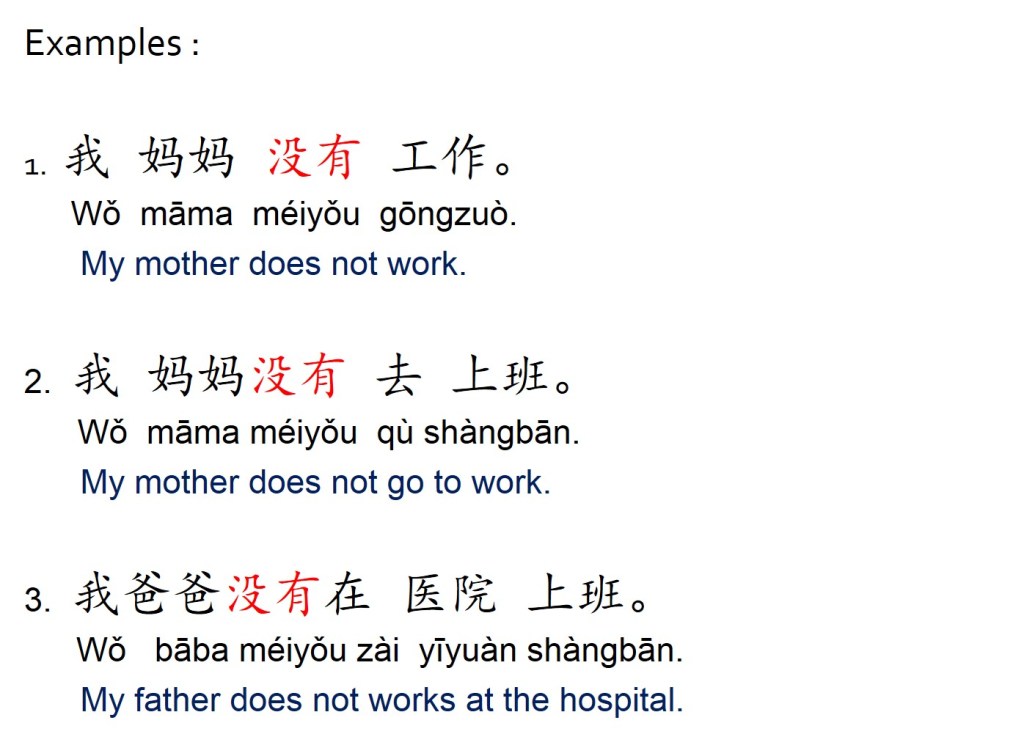
Meaning : does not in Malay : (tidak)
The words 没有 (méiyǒu) is already discussed in the previous lesson.
In the previous lesson, the meaning of 没有 (méiyǒu) is “don’t have”, but in this lesson the meaning is “does not”.
很 hěn
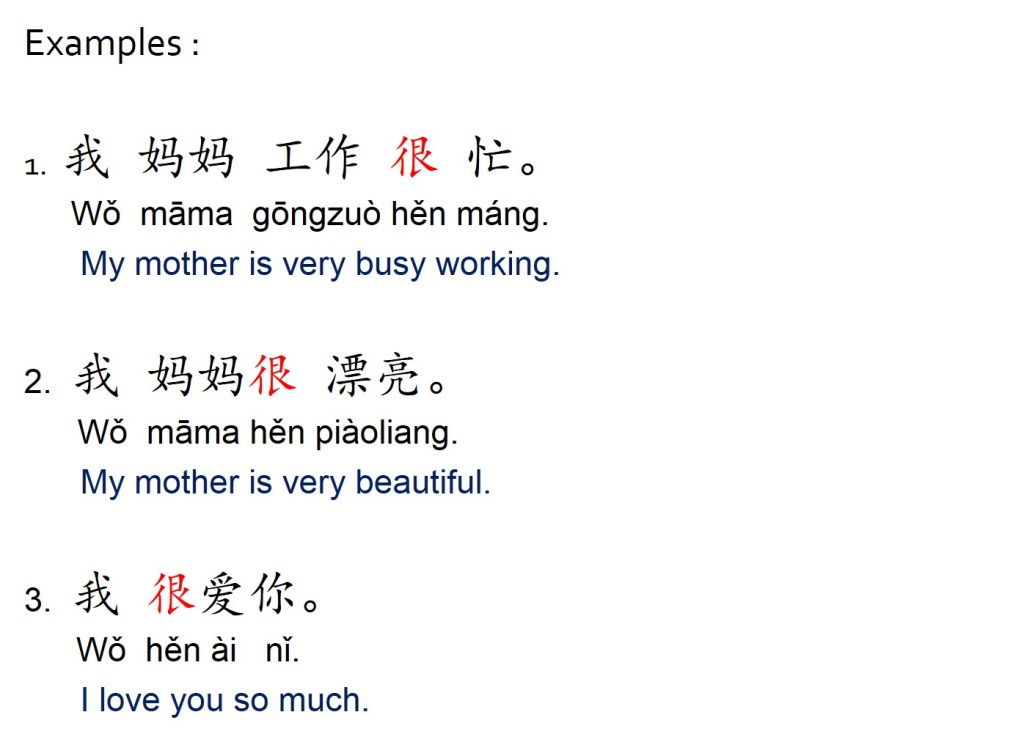
Meaning : very, too in Malay : (sangat)
The words 很 (hěn) is an adverb. When use the adverb, the formula will be like :
Subject / people + verb + adverb (很) + adjectives
Most of the time, the adjectives will be put after the adverb (很).
But sometimes, there are also verbs that be put after the adverb (很) .
 Class of Mandarin